

We must translate pain into action, and tears into growth — The Rebbe
An artist, after suffering from a personal tragedy, wrote to the Rebbe about his depression and despair. The Rebbe wrote back: “The genius of the artist is his ability to detach himself from the external qualities of the object he is portraying, to look deeply into the object and see its essence. He must then be able to express that essence so that whoever views the painting sees an essence that he, the viewer, had never noticed in the object itself. The same applies to each individual; his inner essence is his G-dliness. One must take great care so that the external trappings of his life should not obscure his essence. The tragedies of life must be seen for what they really are: part of the divine system of challenge and endeavor, which enables us to achieve the highest levels of happiness and goodness.”
What is the purpose of pain?
Why is there so much suffering in the world? How do we deal with emotional, spiritual, and psychological pain? Why does G-d sometimes allow righteous people to suffer such extreme pain?
These questions pose a paradox. The very fact that we are naturally upset by suffering testifies to our belief in a fair and righteous G-d, whom we expect to rule the world justly. And yet, we see that pain and suffering cause many people to question the very existence of G-d, or at least His effectiveness.
Even in the deepest moments of despair, we must realize that our absolute faith is what gives us the capacity to understand and deal with our pain. With G-d at the helm, we can accept pain as part of the challenge of life; it motivates us to seek answers, to explore our relationship with G-d, and to grow from the experience.
Are there any benefits to pain and suffering?
Pain and suffering are opportunities to challenge the way we look at life. When things are going well, we tend to take life for granted, but trauma brings us to the edges of life, allowing us to view it from a new, revealing angle.
So the real question we must ask is not just why we sometimes feel such acute pain, but what we are meant to learn from it.
When you see beyond a one-dimensional life, when you realize that you are comprised of not just a body but a body and a soul, you recognize that there is a far higher purpose to your life, and a far deeper meaning to your pain.
The only true explanation for pain and suffering is that the world itself is intrinsically good and that pain and suffering are somehow part of the larger good. This is not to suggest that pain itself is good, nor that we should peacefully accept it. In fact, we must express our feelings of pain to the fullest, and do everything in our power to alleviate suffering in ourselves and in others.
It is your duty to discover how pain may be a blessing in disguise and to overcome the pain and restore harmony to your body and soul. Consider the inevitable frustration that precedes any creative growth, or the intense pain that a woman feels while giving birth. No matter how great such pain may be, it is ultimately justified by the goodness it produces.
How can we relieve our pain?
It is important that you see pain as a test that examines how consumed you are with material comfort as opposed to spiritual growth.
Instead of being broken by pain, you must demonstrate your complete trust in G-d by continuing your life with an intense commitment to goodness, thereby challenging G-d to live up to His promises of being righteous and fair. Trust in G-d is our way of turning pain around. It proves to G-d that, although we may not fully understand our pain, we recognize it as part of a greater good. And despite our setbacks, despite our confusion, despite our pain, we remain absolutely confident that goodness will prevail.
ACTION
For some, starting the climb out of pain requires a strong push, or even hitting rock bottom. This is where true friends play a vital role. When someone you love and care for is in pain, you must be there for him, no matter what he needs. He may say he wants to be alone, that he wants to work through his problems, but you must recognize that this will not work, that the answer is to broaden his perspective, not further limit it. Find a way to spend time with him, to talk with him, to share your thoughts with each other. Most important, love him and help him help himself.

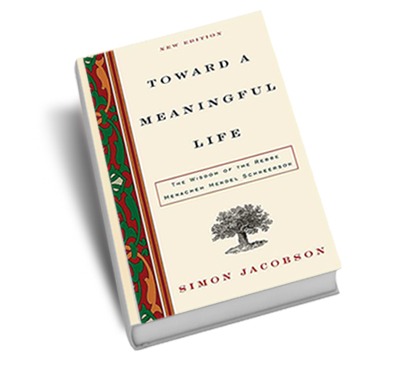
Buy the best-seller, Toward a Meaningful Life starting at $13.99, from our MLC Shop, Amazon or Kindle. Or sign up for our weekly email to receive a dose of meaning every Thursday night.






My understanding of pain; we as humans are dealt different levels of pain to see the growth as a soul and trust the light. My belief is we need to feel the pain. You might say thats crazy, but no because my learning is that its a wave – like a clamp round your heart – so you feel the pain come into your body, feel the pain for that second and it passes. Its so important feeling pain to understand we are not just robots. A soul and feelings with a heart that has a brain and the light wants us to feel pain to grow. Its special and sounds crazy but its beautiful.. love is filled with the energy of light…. Life is a path to grow and learn !!!!
As i sit here and try to find some glimpse of understanding, the deep inseeded hurt i feel, of the love ones lost, that has brought so much heart-break and despair in my life over the years, the physcial pain is unbearable much less the mental confusion, but i know some how that one day, i will smile again, and feel the happiness i once knew, I just really don`t know when or how? I know it is achieveable, i just can`t feel any thing but the hopelessness and sadness of my being.It`s like i understand the way iam suppose to work on this, it seems so simple, but yet so very difficult and impossiable to abtain. The loneliness of life and no love consumes me. May god have compassion and mercy on my soul & mind . The main reason for us to be created was to love and be loved, and thats the hardest real human emotion to acheive. REAL LOVE…..