
To Rabbi Jacobson
With a plethora of spiritual options out there, how can I know what Rabbi and synagogue to choose for myself? One Rabbi tells me that the other one is a sham, the other one tells me that the first one is a lowlife. A third one tells me that both of them are in it for the money. Pray tell, how does one navigate among the multitude of paths being presented today?
To boot I am constantly reminded of my ignorance. Having never gone to yeshiva and never formally studying Judaism I have no way of knowing which Rabbi is authentic? Many of the Rabbis I meet tell me that I have to defer to them as authorities. But I am then presented with the conundrum: How can I decide who is the right authority when each ‘authority’ invalidates the other?
What is a lost soul to do?
—-
Dear LS,
Thank you so much for your question, and especially about a topic so critically important, one that really needs to be addressed today. For some reason many people don’t have the courage to ask these direct questions, or they are silenced when then do. It’s quite refreshing to hear someone ‘put it the way it is’ and perhaps expose the ‘emperor with no clothes.’ I appreciate your candidness and I will try to reciprocate.
First of all, I empathize with you profoundly. I have met far too many people who are disillusioned precisely by the confusion you describe and by the divisiveness amongst Rabbis, synagogues and denominations. Almost everyone out there claims to be an authority and so many just simply contradict each other!
Allow me therefore to address your question from two perspectives. First, regarding the criteria in searching for a Rabbi. Second, regarding divisiveness.
I would like to begin by expanding on your question. Since the Torah is Divine, what did G-d have in mind for us to do when we are faced with the dilemma you describe of choosing the appropriate Rabbi, teacher and authority? The issue at hand is obviously not just about a Rabbi; it is about any teacher you choose. How do we know whom to trust as the right and truthful educator?
By no means is this a minor question. If we don’t know whether our teachers are authentic, how can we ever know whether the information they impart is true? In other words, all our knowledge seems to be dependent on people (teachers, parents, clergy etc.), who, with all their flaws and subjectivity may be feeding us distortions and personal opinions, rather than objective truth. And these so called ‘authorities’ themselves may be victims of the ‘teachers’ before them!
No wonder so many people have simply drifted (or ran) away from all types of ‘authorities,’ especially those claiming a monopoly on absolute truth…
Reminds me of the new constituent who approached his Rabbi. “Rabbi, I hear that the Torah contains the absolute truth, will you teach it to me?” “Of course,” the Rabbi answers. “How much will these lessons cost me?” asks the constituent. “No cost,” the Rabbi exclaims. “How can I charge you for the Torah which G-d gave us for free?!” The man is impressed. They get together to begin the first class. They open up a Torah (Chumash), which is all in Hebrew, and the man cries out: “I don’t read Hebrew. I can’t understand one word in this book!” To which the Rabbi replies: “Hebrew lessons will be $2000”…
What then is G-d’s plan for us: How does He allow us to discover the truth amongst all these unknown pitfalls and uncertainties? What value does the Torah have as a blueprint for life, if we are dependent on fallible human beings to understand this blueprint?
G-d had to somehow and somewhere have built in an ‘immune system’ into the Torah that would allow it to protect itself from con-artists, exploiters, abusers and plain ignoramuses (the list, of course, goes on).
And indeed He did. The Torah itself tells us the nature of truth, Torah and the criteria for a Rabbi and authority.
The Talmud tells us, that each of us was taught the entire Torah in our mothers’ womb. Just like our bodies grow through pregnancy and go through their developmental stages, so too our minds and souls develop during these nine months. Modern medicine knows a little about the fetus’s physiological development, the Torah teaches us about its psychological and the spiritual development. Upon birth we were made to consciously forget, but the truth remains etched in our unconscious psyches. When we discover a truth in our lives – when we are educated and taught wisdom – the truth resonates, because we already have it inside ourselves; it was just concealed beneath the conscious layers of existence.
Truth, in other words, is not owned by anyone. Not by teachers, not by Rabbis, not by scientists. No one has a monopoly on truth. G-d’s truth is planted into all of existence and ingrained in our psyches. We have both the truth within us as well as the tools to discover it. A good teacher is one who helps us cut away the weeds and uncover the flowers within.
Education, in other words, is not so much about imparting information than it is about discovering our inner wisdom. Not so much about educating, as it is about un-educating us from ignorance and bad habits that impede the way to recognize the inner truths within ourselves and others, within life and existence.
Following this line of thought let us now go back to the search for a true Rabbi.
The Torah actually tells us the criteria of a true Rabbi:
1) Mastery of Torah knowledge.
2) Formal ordination from a Rabbi who too was ordained by a Rabbi before him. In effect, every rabbi receives his ordination (“ish me’pi ish”) in an unbroken chain all the way to Moses.
3) Apprenticeship under the guidance and tutelage of an established rabbi and expert in the particular field of law in which the Rabbi will officiate.
And above all – the one least mentioned and least known:
4) Yirat Shomayim – fear and awe of Heaven. Absolute humility in face of G-d. A Rabbi is not an administrator or a fund-raiser, not merely a nice guy with charisma, not even an educator or a mentor; he is a G-dly man, a ‘soul doctor’ if you will, interested only in bringing G-d’s will and wisdom to others.
The most vital credential of a true teacher and Rabbi is humility: the humble recognition that these truths are not his own; they are G-d’s. The Rabbi, the teacher, the authority has to brutally ensure that not one iota of ego gets in the way of his teachings. Before rendering a legal decision, a Rabbi must feel like ‘a sword is hanging over his throat,’ the Talmud says.
Now, you may ask, how can one tell which Rabbi fits these criteria?
Let me suggest a simple foolproof test, which has been proven to work time and again.
If you hear a rabbi – or some other religious authority – say something that doesn’t sound right to you, ask him respectfully the following question, preferably in private: What is the source for the statement you made?
You will find Rabbis answering three different types of answers.
One will say or imply with his body language: “What right do you have to ask me that question? Who do you think you are? I – I am the Rabbi; you are just a simple ignoramus!” Some rabbis may not use these exact words, but this will be their condescending message. More compassionate Rabbis will patronize you instead of insulting you outright. This first category will not allow you to challenge them.
A second answer: I don’t really have a source. It’s my own idea and innovation.” (Some will proudly add: Don’t you find my thoughts brilliant?”)
The third answer: The Rabbi will humbly listen to you, and politely answer: “Here are my sources. Chapter and verse. This is how I interpreted a particular source based on the following commentaries. Here is where I added a certain point, based on the following logic.” In other words, he will show you all his sources and allow you to retrace his logic and process.
I believe that there is no need to tell you which answer is the only one acceptable by Torah standards.
The Torah tells us that a true Rabbi must be able to verify his sources and answer the question: “Mi’haychon dantuni,” what is your source for your judgment of me? He has no right to get angry at that question or feel any personal affront. If he does, he should go get another ‘job.’
Indeed, legitimate Rabbis and Poskim, without waiting to be asked, will include in their legal renderings (‘piskei dinim’) a list of sources and precedents that substantiates their rulings.
Only the teacher that demonstrates humility – subjugates his person to the teachings (not vice versa) – is the one that earns the right to be your true teacher and authority, one that can motivate you and demand of you. All others may impart information, even of vital importance, but you can never trust whether you are getting ‘their truth’ or truth’s truth.
By no means does this suggest that every layperson is equal to a Rabbi and that everyone is an equal authority. On the contrary: Sincere humility – not just brilliant erudition – earns a true Rabbi and teacher the right to be an authority. Laypeople have the right to question with respect and deference – but this questioning too must not be out of arrogance or a need to reject authority in order to justify one’s own position. It too must be done with humility – the humble and sincere search for truth, and for the true authority that can convey truth.
Needless to say, a Rabbi of this caliber will exude only love. He will educate with an attitude that is warm and non-judgmental. His words will resonate with his listeners and students. In his words they will feel G-d’s presence, not his (the Rabbi’s) presence. The words from his heart will enter their hearts.
After all, even a Rabbi and teacher is commanded (in last week’s Torah portion) “V’ohavto l’rayecho komocho” – love your fellow as yourself.
Try out my little test with different Rabbis. Ask them for their sources, and let me know what you discover…
*** *** ***
This message about the nature of true education is also alluded to in the Torah portion, Emor, which begins with the words “Speak…and you shall tell them.” Our sages associate this commandment with the obligation of education. The redundancy (“speak” and “tell them”) informs us ‘to caution the adults concerning the children’ (Talmud Yevamot 114a. Cited in Rashi’s opening commentary to this week’s portion).
The Hebrew word used here for ‘caution’ – ‘lihazhir’ – shares the same root as the word ‘zohar,’ meaning “radiance.” This teaches us the fundamental ingredients of true education: Caution suggests a superimposed warning from without. To radiate implies a resonance from within. We must not merely caution our children and students but we must radiate for them. ‘Speak’ to your children and warn them of all life’s dangers, but do so in a way that ‘you shall tell them’ and radiate from within the inherent beauties of life.
Discipline is a most necessary component in the education. An unshaped and impressionable child needs direction and guidance to grow into a healthy and virtuous adult. Discipline helps avoid the pitfalls and traps of our own selfishness. Yet, how often do we witness – and how many of us have been hurt if not damaged – by discipline devoid of love…
Especially in the religious world, how many of us have been affected by dogmatic, fear driven discipline?! I personally have witnessed the devastating psychological effects of many people growing up (can we call it ‘up’?) in homes and schools that indoctrinated children with the wrath of G-d, with fear and guilt – with everything that has been coined today as ‘religious neurosis.’
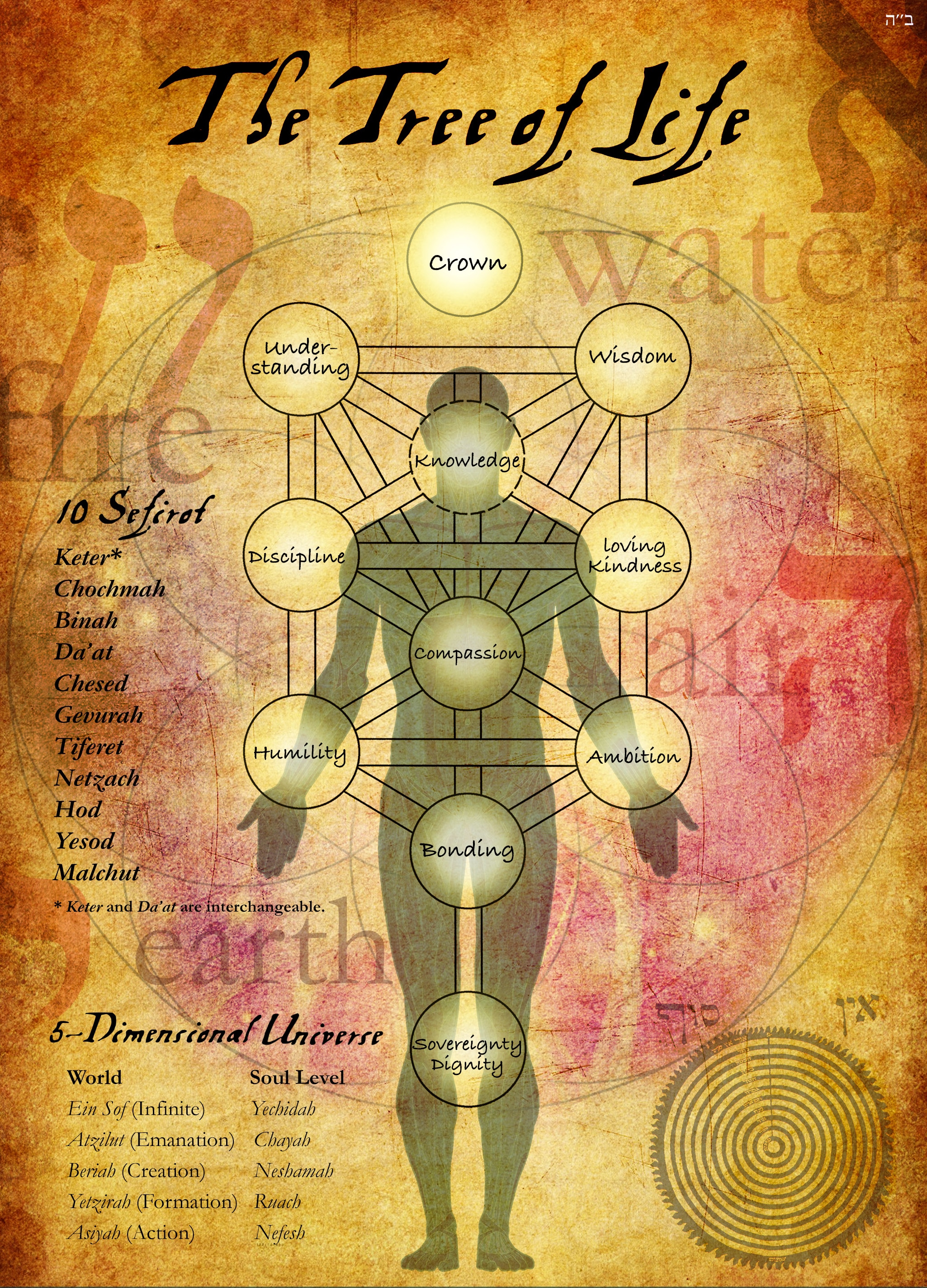
Emor tells us – it actually commands us – to educate our children and students with radiance and love. Discipline and caution are necessary, but they are part of and rooted in the same word as ‘radiate;’ discipline is but a dimension in radiance – gevurah within chesed.
See yourself as a gardener, the Torah is telling us. Within the earth lie flower seeds. Each person carries within him/herself divine beauty and light, by virtue of the fact that we have all been created in the Divine Image. As a gardener, the role of parent and educator is to clean the earth, rip out the weeds – create a nurturing environment so that the ‘flowers’ within your child or student can emerge intact, unencumbered.
Discipline is cleaning out the weeds in your life, in your home and in your behavior, so that your child can flourish. Even when discipline is required in education, always, but always ensure that the child feels that it is coming from a loving place.
A Rabbi or teacher that approaches education in this loving fashion will only bring joy and unity into his community and by extension – into other communities as well.
Which leads us into the second issue of divisiveness. How can you tell which Rabbi brings love into the world and which one causes divisiveness? I discovered the answer to this question in an unforgettable experience that took place several years ago. In the process, I learned of yet another question to ask your Rabbi that will clearly tell you much about his personality.





Perhaps the answer is to become a true student, one who wishes to be a link in the chain back to Moses “ish me’pi ish”.
Then one must themselves cultivate the qualities and and strive for those ideals ascribed to a true Rabbi in this excellent piece. And having done that, one would not settle for a Rabbi lacking any of these qualities.
Everyone wants a true Rabbi; that is easy, the Rabbi is responsible for that. My prayer is that everyone would want to be a true student; they have to be responsible for that themselves. The good news is that while being a good rabbi is in the Rabbis control, being a good student puts all the power in the hands of the questioner.
ein li lehosif al ha summary